

On an August day, Dwayne and Kimberlee Whipple took their 7-year-old son, Kevin, to the hospital, leaving their 2-year-old son, Jaylen Whipple, in the care of his aunt and great-aunt at the family’s apartment in Royal Palm Gardens.
Royal Palm Gardens bordered another housing community, Homestead Colony Apartments. The two properties were separated by a chain-link fence that ran along the perimeter of Royal Palm Gardens and was owned and controlled by Royal Palm Gardens. Swezy Realty and Centennial Management Corporation also had management responsibilities for the property.
While Jaylen’s aunt went outside to retrieve a cell phone charger from her car, Jaylen followed her out of the apartment without her knowledge. He crawled beneath the hedges and passed through a gap or hole in the chain-link fence, entering the neighboring Homestead Colony Apartments.
Rescue divers later discovered Jaylen submerged a few feet from the shoreline of a lake. He was transported to the hospital, where he was pronounced dead from drowning.
Trial Court Dismisses the Wrongful Death Case
BRILL & RINALDI, The Law Firm filed a wrongful death action on behalf of Dwayne and Kimberlee Whipple, alleging that Jaylen’s death resulted from the defendants’ negligence in failing to properly maintain the boundary fence in a safe and secure condition.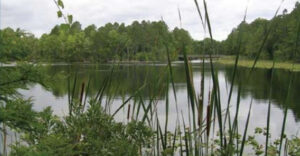
The defendants moved for summary judgment seeking dismissal of the case, and the trial court granted their motion.
The court concluded, as a matter of law, that the defendants did not owe Jaylen a legal duty to properly maintain the fence in a manner that would prevent him from gaining access to the lake. The court also concluded that the alleged negligence was not a legal cause of Jaylen’s drowning.
BRILL & RINALDI, The Law Firm appealed the decision.
Challenging the Dismissal Under the Undertaker’s Doctrine
The firm recognized that established Florida law did not impose liability simply because someone failed to build a fence. The argument on appeal, however, was different.
The defendants had voluntarily undertaken to build a perimeter fence around the property. The firm argued that under a legal theory known as the undertaker’s doctrine, once the defendants undertook to provide that fence, they assumed a duty to exercise reasonable care in maintaining it.
The issue, therefore, was not whether the defendants had an obligation to build a fence in the first place. It was whether, after choosing to construct one, they could potentially be held responsible for failing to reasonably maintain it.
Appeals Court Reverses the Trial Court
The appeals court agreed with the firm’s argument and reversed the trial court’s decision.
The appellate victory overturned the summary judgment that had dismissed the Whipple family’s wrongful death case, allowing their claims concerning the defendants’ maintenance of the perimeter fence to move forward.
I particularly like this one for the Cases Won section because it shows a different kind of win. It isn’t just about the size of a verdict or settlement. The trial court had dismissed the case entirely, and the firm successfully developed a legal argument under the undertaker’s doctrine that persuaded the appellate court to reverse that decision.